Thursday, January 26, 2012
Occupy DC
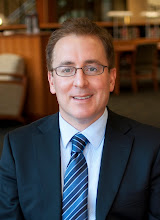
On Tuesday, January 24, I testified at a congressional hearing on the Occupy DC protest in McPherson Square in the District of Columbia. I was invited by the committee on behalf of the democratic minority members, who wanted to have a First Amendment scholar address the importance of public protest in public places and the Park Service's enforcement of its regulations concerning public demonstrations. It was a really interesting experience and a very substantive discussion, for the most part, about the limits of public protest. You can watch the video here.


Tuesday, January 17, 2012
Rahm Emanuel and NATO/G-8 Militarization
It never fails. The G8 or some similar international summit comes to town and local officials invoke something akin to martial law. They call out massive officer brigades, engage in surveillance and covert acts, and cordon off public spaces where protest is permitted so that attendees can be kept safe from the rabble. Now came Mayor Rahm Emanuel, who proposed to do this and more during the NATO/G8 summit scheduled for May in Chicago. Here is how the Huffington Post described the Mayor's proposed ordinance, which some Occupy protesters have dubbed the "Sit Down and Shut Up" ordinance:
However, the proposal still calls for an increased number of surveillance cameras; closing of parks and beaches until 6 a.m.; parade restrictions and higher fees for parades and protests. The police supt. is also empowered to “deputize” out-of-state law enforcement personnel experienced in handling civil unrest. If the past is a reliable guide (and I'm betting it is), these and other measures will lead to substantial limits on public protest, many lawsuits, and settlement liability imposed on the City of Chicago.
This is not the 1968 DNC. It's too bad we have progressed so little in terms of how we often characterize, and how officials treat, lawful protest activity. Before the first parade has hit the streets, the Mayor is seeking emergency powers and police are preparing to do battle with boots on the ground. It's true that mass protests come with some threat to public safety. So do state fairs, holiday parades, and large conventions. But the act of public protest is not itself a threat. Chicago officials would do well to keep that in mind as they prepare for May.
In December, Emanuel announced that the fine for resisting a police officer would be doubled from its current range of $25 to $500 to $200 to $1,000. The mayor's ordinance also restricted the hours of public parks, playgrounds and beaches in accordance with the Chicago Park District's hours of operation. A second ordinance applying to the protests also, among other changes, requires organizers to provide a parade marshal of their own for every 100 demonstration participants.The oringinal proposal also limited the time periods for protest and the use of bullhorns. Today, in the face of protests from protesters and aldermen (among others), Emanuel backed off the increased fines provision. He had previously relented regarding some of the other resrtictions.
However, the proposal still calls for an increased number of surveillance cameras; closing of parks and beaches until 6 a.m.; parade restrictions and higher fees for parades and protests. The police supt. is also empowered to “deputize” out-of-state law enforcement personnel experienced in handling civil unrest. If the past is a reliable guide (and I'm betting it is), these and other measures will lead to substantial limits on public protest, many lawsuits, and settlement liability imposed on the City of Chicago.
This is not the 1968 DNC. It's too bad we have progressed so little in terms of how we often characterize, and how officials treat, lawful protest activity. Before the first parade has hit the streets, the Mayor is seeking emergency powers and police are preparing to do battle with boots on the ground. It's true that mass protests come with some threat to public safety. So do state fairs, holiday parades, and large conventions. But the act of public protest is not itself a threat. Chicago officials would do well to keep that in mind as they prepare for May.
The "Occupy _____" Moment/Movement
I've been working on a second book project, and not regularly posting here. I did a guest stint at Concurring Opinions in September and October, during which I posted several things about the "Occupy" protests. You can check those out here.
The Occupations have mostly been shut out of public parks and plazas. But protesters have found new places to occupy and contest, including the U.S. Capitol. Whatever the future of this moment of discontent, it is clear that the occupiers have moved income inequality to the fore of the national debate. And they did this by moving into and literally commandeering public spaces. I suspect that even in the digital era, this will not be the last protest movement to rely on the streets and parks to spark a national debate.
The Occupations have mostly been shut out of public parks and plazas. But protesters have found new places to occupy and contest, including the U.S. Capitol. Whatever the future of this moment of discontent, it is clear that the occupiers have moved income inequality to the fore of the national debate. And they did this by moving into and literally commandeering public spaces. I suspect that even in the digital era, this will not be the last protest movement to rely on the streets and parks to spark a national debate.
Wednesday, September 21, 2011
Ninth Circuit Invalidates Redondo Beach Anti-Solicitation Ordinance
The Ordinance States:
The case is Comite de Jornaleros de Redondo Beach v. City of Redondo Beach (9th Cir., Sept. 16, 2011).
(a) It shall be unlawful for any person to stand on a street or highway and solicit, or attempt to solicit, employment, business, or contributions from an occupant of any motor vehicle. For purposes of this section, "street or highway" shall mean all of that area dedicated to public use for public street purposes and shall include, but not be limited to, roadways, parkways, medians, alleys, sidewalks, curbs, and public ways.The Ninth Circuit held that the ordinance, which was enacted to regulate the solicitation activities of "day laborers," was not narrowly tailored to the City's interests in traffic safety and flow. In explaining the measure's breadth, the court observed:
(b) It shall be unlawful for any person to stop, park or stand a motor vehicle on a street or highway from which any occupant attempts to hire or hires for employment another person or persons.
The case is Comite de Jornaleros de Redondo Beach v. City of Redondo Beach (9th Cir., Sept. 16, 2011).
The Ordinance technically appl[ies] to children selling lemonade on the sidewalk in front of their home, as well as to Girl Scouts selling cookies on the sidewalk outside of their school and would prohibit signbearers on sidewalks seeking patronage or offering handbills even though their conduct does not pose a traffic hazard, as well as prohibit sidewalk food vendors from advertising their wares to passing motorists. The Ordinance applies to a motorist who stops, on a residential street, to inquire whether a neighbor's teen-age daughter or son would be interested in performing yard work or babysitting. (citations and quotations omitted)
Saturday, September 17, 2011
Phoenix Panhandling Law Invalidated
The Arizona Court of Appeals has invalidated a Phoenix ordinance that banned panhandling at night. The court, applying intermediate scrutiny, held that the ordinance was not narrowly tailored owing to the fact that it banned peaceful, non-threatening forms of solicitation. It rejected Phoenix's argument that the government could protect people on the public sidelwaks and streets from unwanted and uncomfortable encounters.
“Our constitution does not permit government to restrict speech in a public forum merely because the speech may make listeners uncomfortable,” the appeals court wrote. “The First Amendment does not allow the City to restrict speech in a public forum merely because listeners might prefer not to hear a message that may annoy them or make them uneasy.”
Wednesday, August 17, 2011
The Network and Public Protest
In public protests around the world, governments have taken steps to deny or interefe with protesters' access to the Internet and to cellular service. Such access has been critical in terms of facilitating the organization of public protests against repressive regimes. Cut off the network, and you may prevent or at least weaken the protest. Interference with network access also limits the ability of protesters to transmit information about what is happening on the ground.
I wouldn't call San Francisco's BART, a public transportation agency, a repressive regime. However, the agency recently cut off cell service in the subway system in advance of a planned protest. Protesters had indicated that they would use social networking services to coordinate their protest and to report on the number and location of police.
I tend to agree with Eugene Volokh's conclusion that BART's temporary restriction is constitutional under current First Amendment doctrine. In so-called nonpublic forums, government can restrict speech based on its content so long as the restriction is both viewpoint neutral and reasonable. The restriction here is clearly viewpoint-neutral. But is it reasonable? Arguably so, since a significant protest might have interfered with BART service and disrupted travel in the system. Under current public forum doctrine, that's probably sufficient to uphold the restriction.
But where does that logic lead? Might it result in similar restrictions being upheld in public areas that are designated for speech activity? Is the service interruption really so different from barricades, fences, and other physical restrictions that limit or in some cases prevent effective communication? All of these things interfere with, but do not entirely prevent, public speech. A service interruption makes it more difficult to organize a protest. But so do police surveillance, protest zones, permit applications, etc. Perhaps, as Volokh suggests, the distinction lies in the content-based nature of the service interruption. That was clear in the BART case; but it might not be conceded in others. Or is a service interruption a presumptively unconstitutional prior restraint on speech? Courts may ultimately have to address this issue, as authorities seek new means of regulating protests in networked public places.
I wouldn't call San Francisco's BART, a public transportation agency, a repressive regime. However, the agency recently cut off cell service in the subway system in advance of a planned protest. Protesters had indicated that they would use social networking services to coordinate their protest and to report on the number and location of police.
I tend to agree with Eugene Volokh's conclusion that BART's temporary restriction is constitutional under current First Amendment doctrine. In so-called nonpublic forums, government can restrict speech based on its content so long as the restriction is both viewpoint neutral and reasonable. The restriction here is clearly viewpoint-neutral. But is it reasonable? Arguably so, since a significant protest might have interfered with BART service and disrupted travel in the system. Under current public forum doctrine, that's probably sufficient to uphold the restriction.
But where does that logic lead? Might it result in similar restrictions being upheld in public areas that are designated for speech activity? Is the service interruption really so different from barricades, fences, and other physical restrictions that limit or in some cases prevent effective communication? All of these things interfere with, but do not entirely prevent, public speech. A service interruption makes it more difficult to organize a protest. But so do police surveillance, protest zones, permit applications, etc. Perhaps, as Volokh suggests, the distinction lies in the content-based nature of the service interruption. That was clear in the BART case; but it might not be conceded in others. Or is a service interruption a presumptively unconstitutional prior restraint on speech? Courts may ultimately have to address this issue, as authorities seek new means of regulating protests in networked public places.
Wednesday, August 3, 2011
Oakland's "Bubble Ordinance" Invalidated As Applied to Sidewalk Counselor
In Hoye II v. City of Oakland (9th Cir. 2011), the court invalidated Oakland's "bubble" ordinance, as applied to an abortion clinic sidewalk counselor. I especially liked this opening passage:
Eugene Volokh has more on the decision here.
Throughout our nation's history, Americans have counted on the First Amendment to protect their right to ask their fellow citizens to change their mind. Abolitionists, suffragists, socialists, pacifists, union members, war protestors, religious believers, civil rights campaigners, anti-tax activists, and countless others have appealed to the principle, enshrined within the First Amendment, that in a democracy such as ours, public debate must be robust and free and that, for it to be so, the Constitution's protection of the freedom of speech must extend to the sidewalk encounter of the proselytizer and his prospective convert. These instances of public persuasion constitute the lifeblood of a self-governing people's liberty, and so even when the beliefs propagated seem to some the “rankest error” that “naturally would offend” any listener, our founding charter deems such encounters “in the long view, essential to enlightened opinion and right conduct on the part of the citizens of a democracy.” Cantwell v. Connecticut, 310 U.S. 296, 309–310 (1940). This case calls on us to apply that principle.As the court indicated, the main problem with the enforcement of this ordinance, which restricts counseling and other forms of speech within the personal space of abortion clinic patients, was that authorities did not apply it even-handedly to counselors who encouraged women to utilize the facilities. The record indicated that only sidewalk counselors who sought to convince women not to obtain an abortion were arrested and prosecuted under the ordinance. I suspect this is typically the case -- i.e., a bubble ordinance is couched in neutral terms, but applied only to those who are near the abortion clinic to protest its activities and to discourage women from obtaining and abortion.
Eugene Volokh has more on the decision here.
Friday, May 27, 2011
Dearborn Leafletting Ruling
A federal appeals court has ruled (2-1) that a decision by Dearborn, MI officials to limit evangelists to a booth rather than surrounding sidewalks during the city's annual Arab-American festival violated the First Amendment speech rights of the leafletters.
Wednesday, March 2, 2011
Snyder v. Phelps
There have obviously been a lot of public protest activities of note recently (Egypt and other global hot spots, the protests in Madison, Wisconsin). Today the Supreme Court handed down its decision in Snyder v. Phelps, the case involving the funeral protests by the Westboro Baptist Church. The case garnered lots of media attention, in part owing to the sympethetic plaintiffs and the incendiary speech of the Phelps family, who comprise the Westboro Baptist Church. The Court held, 8-1, that the civil verdict against the WBC for intentional infliction of emotional distress and "intrustion upon seclusion" could not stand. The majority concluded that the WBC's speech was on "a matter of public concern" and thus entitled to full First Amendment protection. It was also significant that WBC's members were speaking on a public sidewalk, or "public forum," where they had a right to be. Justice Alito argued in dissent that since Mr. Phelps, the father of the fallen Marine, was a private figure, full protection ought not to apply to the WBC's speech. He likened their expression to a verbal assault that inflicted psychological injury, and disagreed with the majority that civil liability could not attach to such expression.
The decision is a strong re-affirmation of some very basic First Amendment principles. Public speech in a public forum on matters of public concern is granted special protection under the First Amendment. Moreover, the hatefulness or offensiveness of spech is not a proper ground for regulating or suppressing it. Under the intentional infliction theory pursued in the case, "outrageousness" is the core standard for determining whether a statement is tortious. The Court rightly rejected that as a standard for jury application, on the ground that it invites subjective judgments regarding the content of expression. In traditional public forums, as well as newer cyber-forums, speech is often heated, hateful, and offensive. (The Court dodged regulation of "outrageous" speech on the Internet by concluding that a Web posting by WBC was not properly made part of the plaintiff's case on appeal.) Indeed, that is often the point. So, too, do speakers frequently use public places to amplify or publicize their messages -- as the WBC has done with what can only be characterized as substantial success. The Court granted protection to this contestation of place (within the limits of reasonable, content-neutral, time, place and manner regulations). In sum, although many will no doubt share Justice Alito's aversion to the speech in question and WBC's tactics, Snyder v. Phelps is a very significant victory for public speech and contention.
The decision is a strong re-affirmation of some very basic First Amendment principles. Public speech in a public forum on matters of public concern is granted special protection under the First Amendment. Moreover, the hatefulness or offensiveness of spech is not a proper ground for regulating or suppressing it. Under the intentional infliction theory pursued in the case, "outrageousness" is the core standard for determining whether a statement is tortious. The Court rightly rejected that as a standard for jury application, on the ground that it invites subjective judgments regarding the content of expression. In traditional public forums, as well as newer cyber-forums, speech is often heated, hateful, and offensive. (The Court dodged regulation of "outrageous" speech on the Internet by concluding that a Web posting by WBC was not properly made part of the plaintiff's case on appeal.) Indeed, that is often the point. So, too, do speakers frequently use public places to amplify or publicize their messages -- as the WBC has done with what can only be characterized as substantial success. The Court granted protection to this contestation of place (within the limits of reasonable, content-neutral, time, place and manner regulations). In sum, although many will no doubt share Justice Alito's aversion to the speech in question and WBC's tactics, Snyder v. Phelps is a very significant victory for public speech and contention.
Wednesday, January 12, 2011
Arizona Funeral Protest Law
The Arizona legislature has quickly enacted limits on protests near funerals. The law was passed in anticipation of protests at the funerals of some of the victims in the recent Tucson shooting. It is apparently modeled on an Ohio measure that was upheld by the Sixth Circuit.
Monday, December 20, 2010
CUNY's Culture of Protest
This article from the N.Y. Times highlights some of the challenges student protesters face today, from increased campus security to harsher penalties for various forms of civil disobedience on campus. The author compares the relatively modest student response at CUNY to tuition increases to the recent protests in the U.K. regarding rising education fees. The students at CUNY have tried public contention in years past. They've now apparently moved on to forms of protest they think might be more effective -- specifically, legal process. In a sense, this simply represents the steady institutionalization of protest. What began "in the streets" ends up in negotiations with administrators and, when all else fails, in the courts. I have seen too many examples, some quite recent, of robust student protest to conclude that the campus protest is a thing of the past. There are still idealistic students on the nation's campuses. But for a variety of reasons, some of which are examined in the piece, campus protests are not as a general matter likely to be as frequent or as effective as they used to be.
This is an important change in the nation's expressive culture. Whatever one might think of the efficacy or desirability of protests as a general matter, we ought to be concerned that a generation of students may be learning the lesson that public contention is a dangerous and wholly ineffectual form of expression. If during these formative years students do not learn to test the bounds of authority, through various means, when if ever will they learn to do so?
This is an important change in the nation's expressive culture. Whatever one might think of the efficacy or desirability of protests as a general matter, we ought to be concerned that a generation of students may be learning the lesson that public contention is a dangerous and wholly ineffectual form of expression. If during these formative years students do not learn to test the bounds of authority, through various means, when if ever will they learn to do so?
Monday, December 6, 2010
"Kettling"
I posted something earlier about the austerity protests in Britain and France. As this article shows, my and others' sense that the British would simply accept social welfare cuts with a "stiff upper lip" failed to consider the student population. British students have indeed taken to the streets in considerable numbers to protest rising tuition and education cuts. Police officers have been playing a cat-and-mouse game with the protesters. In some cases, they have herded the students into pens. This strategy of containment has been referred to as "kettling," a term I had not heard before. Students have responded to kettling by engaging in less centralized assemblies, and by using social networks to evade police spatial tactics.
Tuesday, November 30, 2010
Arresting Reporters at Demonstrations
Here is some very cogent commentary on this issue, from the First Amendment Center. When authorities militarize public places during protests and demonstrations, they tend to cast a wide net. Reporters and other law-abiding people are sometimes swept into those nets. Some of the examples cited in the commentary involve the recent protest at Fort Benning, which is discussed below.
Monday, November 22, 2010
Fort Benning Protest
The N.Y. Times published this interesting article today, about the annual demonstration at Fort Benning in Columbus, Georgia. Protesters have been gathering there for years to protest the training of Latin American military officers at the school of the Americas, which is affiliated with the Department of Defense. The article reports on the dwindling number of protesters, and some possible reasons for the decrease in activity. These include the bad economy, the apathy of young people, and the school's own efforts to engage the public and to draw attention away from the instruction they are providing. Also among the likely reasons for the decline: A more aggressive police response to protesters, and the imposition of jail terms for some of those who trespassed on the base. Recently, a small group of protesters tried to draw attention to their cause by demonstrating in the public streets. They were arrested, as were several other protesters who apparently failed to follow police instructions following a parade. The Fort Benning story highlights many of the challenges faced by modern protesters. Only some of these relate to protest policing. What was perhaps most surprising to me was the longevity of the Fort Benning demonstrations. Public contention of this sort requires no small commitment, and some traveled long distances to be a part of this event.
Saturday, November 20, 2010
LA Street Performers Get A Reprieve
As reported here, Batman, Zorro, and other characters remain free to perform on Hollywood Blvd. Police had increased patrols and arrests, apparently in reponse to complaints of aggressive panhandling and other behavior by some of the performers.
Wednesday, November 10, 2010
Residential Picketing and True Threats
As this report indicates, North Carolina authorities have charged an abortion protester with violating a new state law against targeted residential picketing. The Supreme Court upheld a residential picketing ordinance that prohibited the targeting picketing of a residence. In this case, the protesters distributed "Wanted" posters in the neighborhoods of abortion providers. The state has characterized this as stalking and threatening conduct. In the "Nuremberg Files" case, the Ninth Circuit upheld a civil verdict against abortion protesters for posting similar posters to the Web. In that case, the appearance of "Wanted" posters had been followed by the murders of abortion providers. The Ninth Circuit held that the posters constituted "true threats," which are unprotected speech. It will be interesting to see whether the North Carolina targeted picketing statute, as applied to the abortion protesters, withstands scrutiny under the First Amendment.
Street Preacher Victory
As reported here, a man who took to the streets of Greenville, SC to preach against homosexuality has won his case on appeal. The South Carolina Supreme Court found that a portion of the ordinance under which the preacher was arrested, which prohibited making comments that are "humiliating, offensive, scary or obscene," is unconstitutionally vague.
Monday, November 1, 2010
Moscow Protest as Microcosm
This story in the N.Y. Times, which reports on a small public protest in Moscow, demonstrates both the importance of public contention to speakers and the threat such assemblies can pose to authorities. The right of assembly is guaranteed in the Russian constitution. But this is a mere parchment guarantee. Protesters are routinely arrested and dealt with harshly by authorities:
In the past year, Russia’s leaders have been forced to discuss this group of protesters regularly. In an interview with the newspaper Kommersant in August, Prime Minister Vladimir V. Putin said that if they gathered without sanction, “They will be bashed on the head with a club,” and that a softer government position would only embolden them.
“If the objective is forcing concessions on the powers that be, and if the powers that be do buckle under, then provocations will be endless,” he said. “They will be staged again and again.”But times may be changing. At least so long as the protests remain relatively small and non-violent, the authorities may be willing to permit some public contention:
But in mid-October, Vladislav Surkov, the deputy director of the presidential administration, said he saw little threat in allowing the event, remarking that the regular confrontations had become “a sort of burlesque.”
“If in Moscow, a city of many millions, 200 people want to gather exactly on the 31st, exactly on Triumphal Square, in these modest numbers, let them gather,” he said in an interview. “I am sure the new mayor will make the right decision. And it will be a decision in the spirit of the president’s policies.”
Monday, October 25, 2010
The French, the British, and Public Contention
Here is an interesting piece from the N.Y. Times comparing the response of French and British citizens to austerity measures in those countries. Not surprisingly, the French have taken to the streets more regularly and in greater numbers than the British.
Wednesday, October 13, 2010
Certiorari Denial in 2005 Bumper Sticker Ejection Case
Over three dissents, the Supreme Court has denied cert. in a case involving the ejection of two people from a 2005 public event featuring George W. Bush. The ejection was apparently based solely on the subject matter of the bumper sticker on their car. The N.Y. Times has the story. The central legal issue in the case is whether the officials who ejected the two are entitled to qualified immunity on the ground that no "clearly established" principle of First Amendment law was violated.
Subscribe to:
Posts (Atom)